Direct Bookings vs OTA Bookings: What Commissions Really Cost a Small Philippine Guesthouse
How much OTA commissions actually cost a small Philippine guesthouse, when OTAs are worth it, and practical ways to get more direct bookings without leaving Booking.com or Agoda.
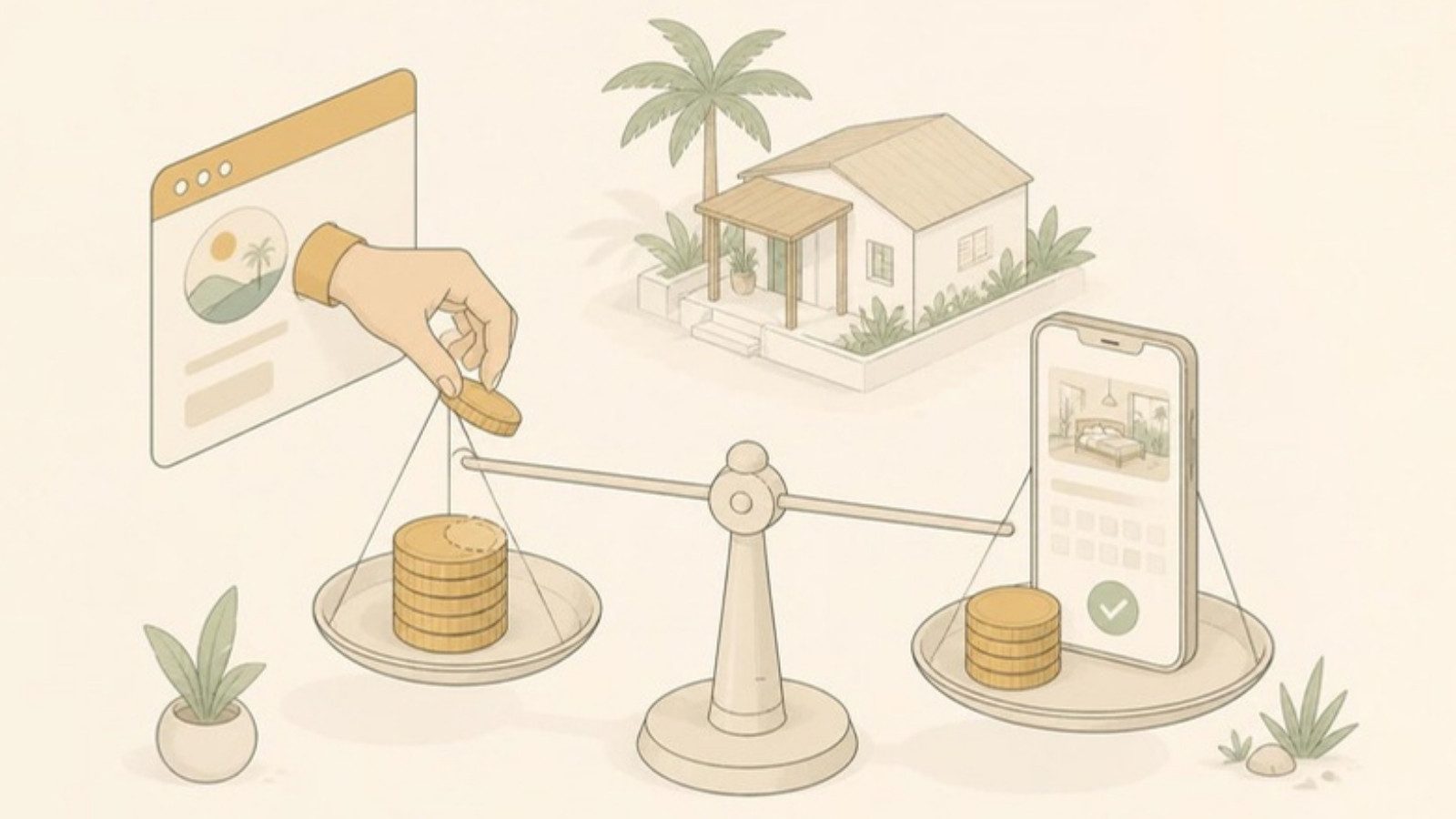
Open your last Booking.com or Agoda payout and compare it to the rates on your listing. That gap is the commission. Most owners know it exists. Fewer have added it up over a year.
This isn't an "OTAs are bad" article. For a small guesthouse in Bantayan, Siargao, El Nido or Moalboal, OTAs are often how most first-time guests find you at all. The goal is to see what each channel really costs, so you can decide where your next booking should come from.
What OTAs actually charge
Commission depends on your contract, your country, the programs you join and sometimes your ranking settings, so check your own extranet for your exact rate. As a rough guide:
- Booking.com usually charges 15% or more, and more if you join visibility programs.
- Agoda commissions for Philippine properties are often in a similar range or higher, depending on your contract and promotions.
- Airbnb either charges hosts around 3% with the guest paying a service fee, or around 15% under host-only fee pricing, depending on your setup.
Promotions, "preferred" programs and discounts the OTA asks you to fund can push your real cost above the headline rate.
What it adds up to
Take a 6-room guesthouse with an average rate of ₱1,800 per night, 60% occupancy over the year, and 70% of bookings coming through OTAs at an average commission of 17%.
| Per year | |
|---|---|
| Room nights sold (6 rooms × 365 × 60%) | ~1,314 |
| Room revenue (× ₱1,800) | ~₱2,365,000 |
| OTA share (70%) | ~₱1,655,000 |
| Commission paid (17% of OTA share) | ~₱281,000 |
That's about ₱23,000 a month. For many small properties that's more than a staff salary.
Now shift just 10% of bookings from OTA to direct (70% → 60%). Commission drops by roughly ₱40,000 a year, money that stays in the business for the same guests and the same rooms.
These are illustrative numbers. Run your own. Your payout reports show exactly what you paid last year, and if you aren't tracking commission as a separate cost yet, start with Is Your Guesthouse Actually Making Money?.
Why OTAs are still worth it
Before you consider leaving any OTA, be honest about what the commission pays for:
- Discovery. Travelers who've never heard of you, searching "Bantayan Island hotel" on an app they already trust.
- Trust. Reviews, a familiar booking flow and a platform that will handle disputes. A first-time foreign guest is much more comfortable paying Booking.com than sending GCash to a stranger's Facebook page.
- Payments. For prepaid bookings, the OTA collects from the guest.
- Reach during lean months. OTA promos can fill rooms that would otherwise sit empty.
The commission is a marketing cost. Sometimes it's a good deal, especially for guests you never would have reached on your own. The problem is paying it for guests who would have booked you directly anyway.
Who you're overpaying commission for
These guests are the easiest to move to direct booking:
- Repeat guests who stayed before and now rebook through the OTA out of habit
- Guests who found you on Facebook or Google Maps, then went to Booking.com to actually book because there was no easy way to book with you
- Messenger inquiries you replied to too slowly, who gave up and booked through an OTA (possibly with you, at a commission, or with a competitor)
- Group and family bookings that would happily deal with you directly
That last point on slow replies matters more than most owners think. We covered it in How Much Is a Missed Booking Actually Costing You?.
What stops guests from booking you directly
Usually it isn't price. It's friction:
- They can't see availability. They have to message and wait. At 11 p.m., they won't.
- Paying feels risky. Sending GCash to a personal account based on a Facebook post makes careful travelers nervous, especially with scam pages around.
- There's no confirmation. An OTA sends a booking confirmation. A Messenger chat doesn't feel the same.
- You're hard to find. No website, an outdated Facebook page, no Google Business Profile.
Fix those four and direct bookings rise without any discount.
Practical ways to get more direct bookings
Make booking direct as easy as booking on an OTA. A booking page where guests can see real availability, choose a room and pay removes most of the friction above.
Put that link everywhere you already are. Facebook page button, Instagram bio, Google Business Profile, your Messenger saved replies, and the card you hand guests at check-out.
Look after repeat guests. At check-out, tell them: "Next time, book with us directly." A small perk (late check-out, a free breakfast, an airport/port pickup) gives them a reason without starting a price war.
Answer fast. A quick, clear reply with a booking link converts better than a long back-and-forth.
Be careful with price. Some OTA agreements include rate parity terms that limit publicly offering lower rates elsewhere. Read your contract. Perks and added value are usually a safer way to reward direct bookers than undercutting your OTA price on a public site.
Don't leave the OTAs. Use them for discovery, and make it easy for guests who already know you to come back directly.
What a booking website costs vs what it saves
A direct-booking website doesn't need to cost thousands a month.
Simple math: at ₱1,800 a night and 17% commission, each OTA night costs you about ₱306. A booking tool costing ₱700 a month pays for itself once about three room nights a month come direct instead of through an OTA. Everything beyond that is margin you keep.
How GoOverbooked handles direct bookings
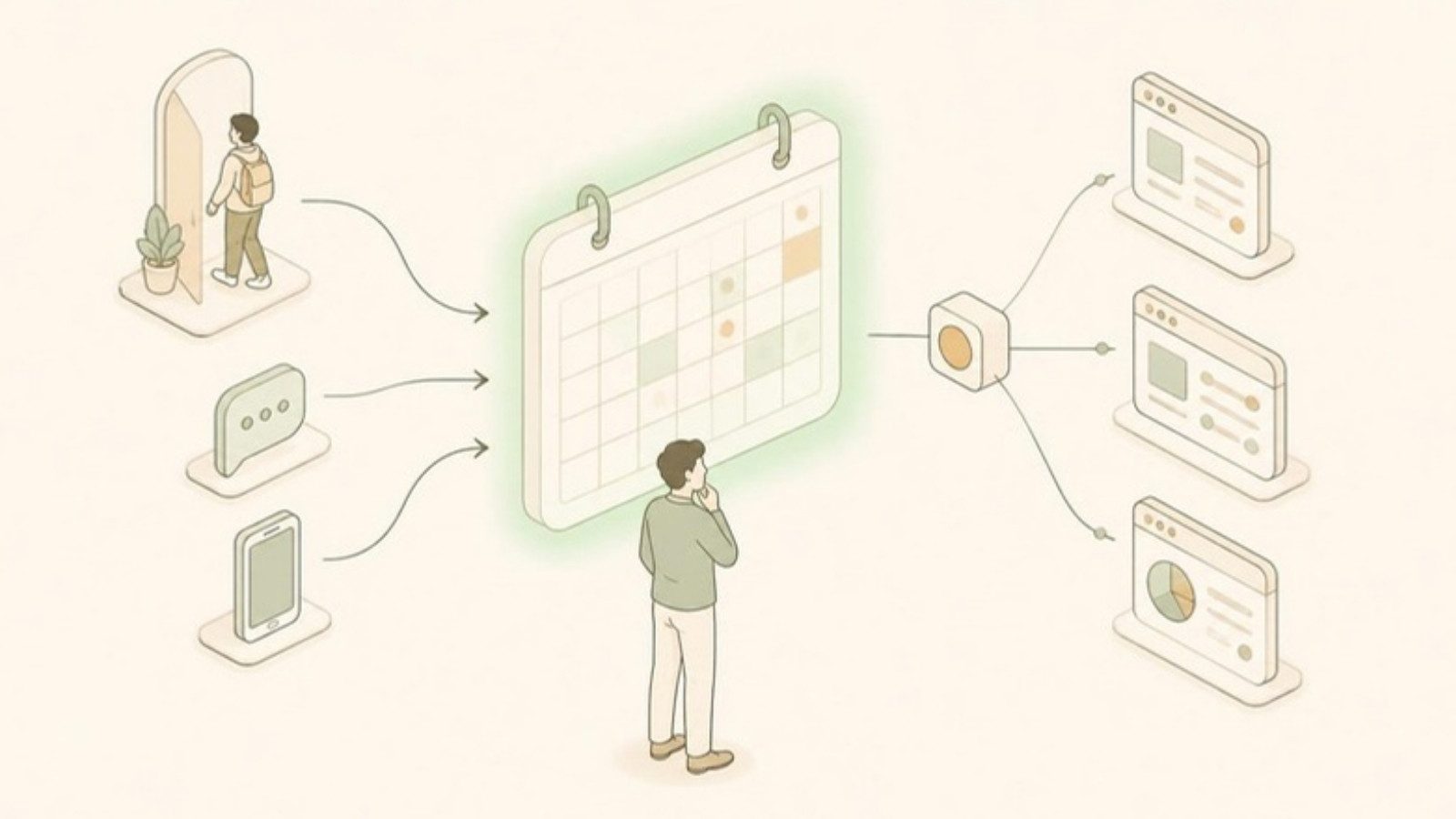
GoOverbooked's Booking Website add-on gives your property its own booking site (a free address like yourhotel.gooverbooked.com) where guests can see availability, book and pay online, with no OTA commission on those bookings. It's designed to look good on a phone, which is where most guests in the Philippines will open it from a Messenger or Facebook link. It costs ₱700 a month and runs on top of the free GoOverbooked PMS, so direct bookings land on the same calendar as your OTA and walk-in bookings.
If you're comparing it with other systems, our buyer's guide to hotel management software in the Philippines covers what to look for. Pricing for the add-on is on the pricing page.
Whatever you decide, start by pulling last year's OTA payout totals. Once you see the commission as one number, it's much easier to decide how hard to push for direct bookings.
Free to start
Run your hotel without the headaches.
Try the live demo in 30 seconds. No signup needed.